Showing your barber a photo is the fastest way to start the consultation and the easiest way to derail it. The picture shows a finished style on someone else's head, with someone else's hair density, hairline, and growth pattern, often professionally lit. That does not make photos useless. At In The Cut Barbershop in Newton, a photo plus three plain sentences gets better results than either one alone.
The myths around photo cuts cause most of the disappointment. Sort them out first, and the conversation in the chair gets shorter and more accurate.
Myth, fact, and it-depends
| Claim | Verdict | Why |
|---|---|---|
| A good barber can copy a photo exactly | False | Your hairline, density, and growth direction differ from the model's. A barber can copy the shape and proportions, adjusted to your head. |
| One photo is enough | It depends | One photo from one angle leaves the back and the other side to guesswork. Two or three angles of the same cut settle it. |
| Photos of celebrities are bad references | It depends | The cut itself is a fine reference. The styling, lighting, and hair density in a professional shoot are the misleading parts. |
| Guard numbers make a photo unnecessary | False | A number states one length in one area. It says nothing about the top, texture, fringe, or how the areas connect. |
| If the cut looks different on me, the barber failed | False | Fine hair cannot hold a style built on thick hair, and a strong cowlick will move a fringe. Different raw material, different result, same cut. |
| Showing a photo of my own past cut is the best reference | True | Same head, same hair, proven grow-out. A photo of your own cut two weeks after it was done is the most useful picture you can bring. |
The three sentences that do the real work
First, say what you like about the photo in terms of areas: the tightness of the sides, the length and texture on top, the shape of the fringe. "I like how short the sides are" is actionable; "I want to look like this" is not. Second, say what you do not want, especially from past cuts: a hard line here, bulk there, a neckline shape you disliked. Third, say how you actually style it at home, or admit that you do not. A cut that needs ten minutes and two products will not survive a man who allows himself ninety seconds and a towel.
Guard numbers belong in this conversation too, from your last good cut. If you know the sides were a one blended to a two, say so. Numbers are a shared language between barbers, and they anchor the photo to your head instead of the model's.
Describing the top versus the sides
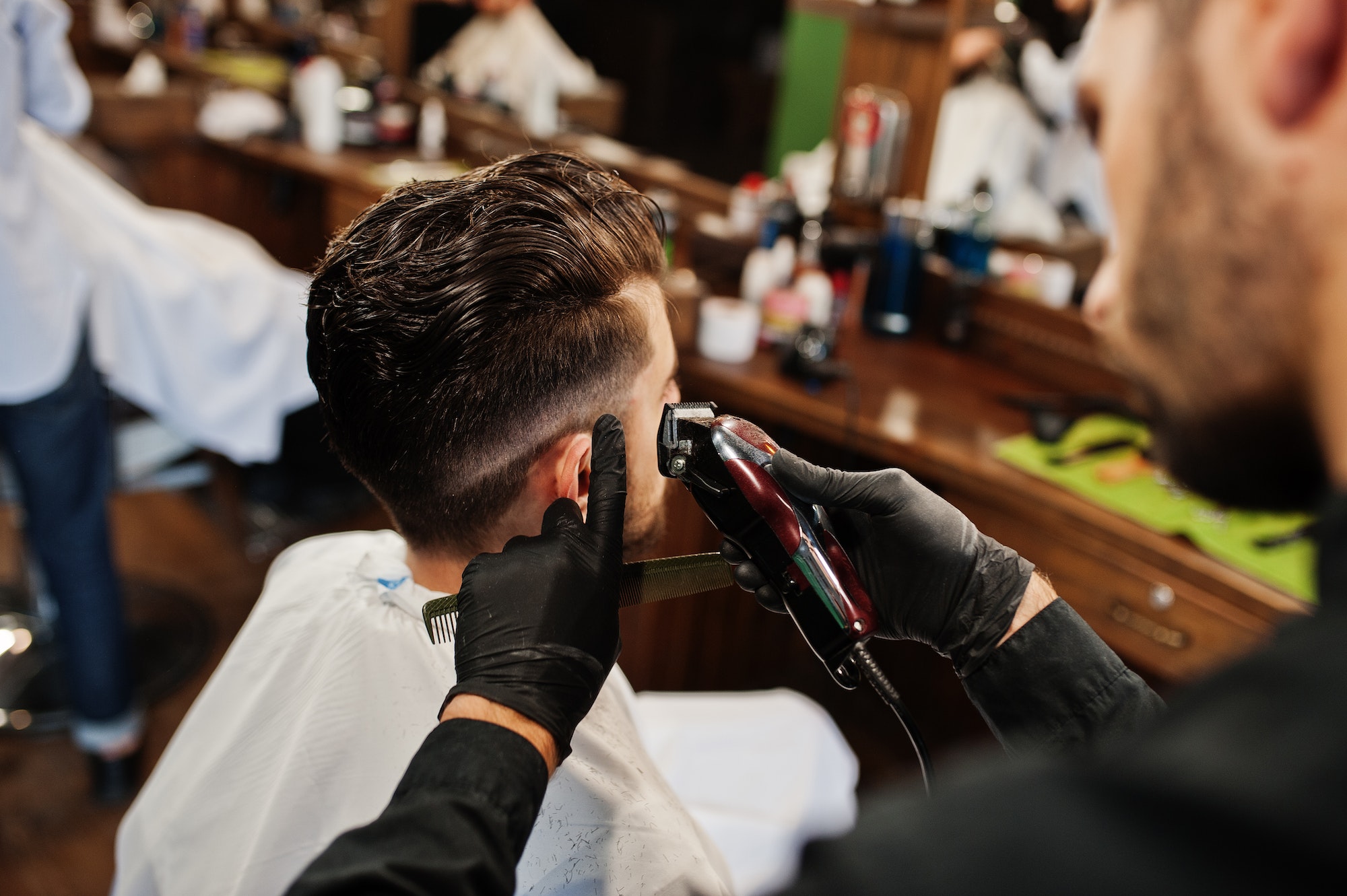
Most photo arguments are really two separate arguments. The sides are about length and tightness: how short, how high the fade sits, whether the edge around the ears is sharp or natural. The top is about length, direction, and texture: forward or back, textured or smooth, fringe or pushed up. Treat them separately when you talk. A photo can be right about the sides and wrong for your top, and saying so lets the barber take half the reference and adapt the rest.
Also name the maintenance you are signing up for. A skin fade in the photo is a two-to-three-week commitment in Newton before it softens; a longer scissor cut forgives five weeks. If your schedule says monthly, pick the reference that still looks right at week four.
When the barber pushes back
A barber who looks at your photo and raises a problem is doing you a service, not refusing work. The usual objections are specific: your hairline sits lower, your crown whorl will split that fringe, your hair is half as dense. Ask what they would change to get the closest honest version. That adjusted cut, agreed before the clippers start, is the one that still looks right in your bathroom mirror under ordinary light.
Common questions
How many photos should I bring?
Two or three of the same cut from different angles, or one photo of the cut plus one of your own head from a past cut you liked. Ten different styles start the conversation over.
Should I show the photo before or after I sit down?
Before the cape goes on, during the consultation. Changes are free at that point and awkward once cutting has started.
What if I do not know any guard numbers?
Say so, and describe the sides by feel instead: tight to the skin, short but covered, or long enough to comb. The barber can translate, and note the numbers for next time.
Photos in this guide are representative stock images.
← All guides from In The Cut Barbershop← Back to In The Cut Barbershop