Every head has at least one spot where the hair refuses to follow instructions. It stands up at the crown, splits at the front, or sweeps sideways no matter how firmly it was combed down that morning. That spot is not stubbornness and it is not a bad cut, though a bad cut can make it far worse. It is a growth pattern, set before you were born, and at In The Cut Barbershop in Newton it is one of the first things a barber reads before picking up the clippers.
Understanding the pattern changes the argument. Instead of fighting a cowlick with more product and more heat every morning, you choose a cut that uses the direction the hair already wants to travel. The table below sorts the common patterns and the working answers for each.
The vocabulary: whorls, crowns, and hairlines
A whorl is a spiral growth point, most often at the crown. Hair radiates out of it in a circle, which is why crown hair wants to stand up in the middle of the spiral and lie in different directions around it. Some heads have two whorls side by side, the double crown, which produces two spirals pushing against each other and a ridge of hair that pops up between them.
A cowlick usually refers to a strong directional patch, often at the front hairline or the nape, where hair grows at an angle sharply different from its neighbors. Front cowlicks are why fringes split in the same place every day. Nape whorls are why one side of a neckline grows out neat and the other kicks outward within a week.
Growth direction matters as much as length. Hair that grows forward on top wants a different style than hair that grows straight back, and forcing either one against its direction is a daily tax you pay in time and product.
| Pattern | What it does | Cut that fights it | Cut that works with it |
|---|---|---|---|
| Single crown whorl | Hair spirals and stands at the center | Medium length clipped against the spiral, leaving a tuft that pops up | Very short and even, or enough length on top for the spiral to lie over in its own direction |
| Double crown | Two spirals meet and push hair upright between them | Uniform medium length, which leaves a permanent ridge | Shorter overall, or textured length that breaks the ridge into softer pieces |
| Front cowlick | Fringe splits or sweeps hard to one side | A straight, blunt fringe cut across the growth | A fringe worn in the direction of the sweep, or a textured crop that makes the split look intentional |
| Nape whorl | One side of the neckline kicks out as it grows | A hard, squared neckline that shows every deviation within days | A tapered, natural neckline that hides uneven grow-out for weeks |
| Forward growth on top | Hair pushes toward the forehead | A slicked-back style held down with product all day | A forward crop or fringe that uses the push instead of resisting it |
Why product alone never wins
Product holds hair where you put it until humidity, sweat, or a hat undoes it, which in a Newton summer can mean by ten in the morning. It does not change the angle hair leaves the scalp. When a style needs a full palm of pomade and a blow-dryer aimed against the growth just to leave the house, the style is wrong for the head, and no brand upgrade fixes that.
The better sequence is cut first, product second. Get length and direction right in the chair, then use a small amount of product to finish rather than to force. If your morning routine runs longer than five minutes, that is diagnostic information, not a discipline problem.
How a barber reads your head
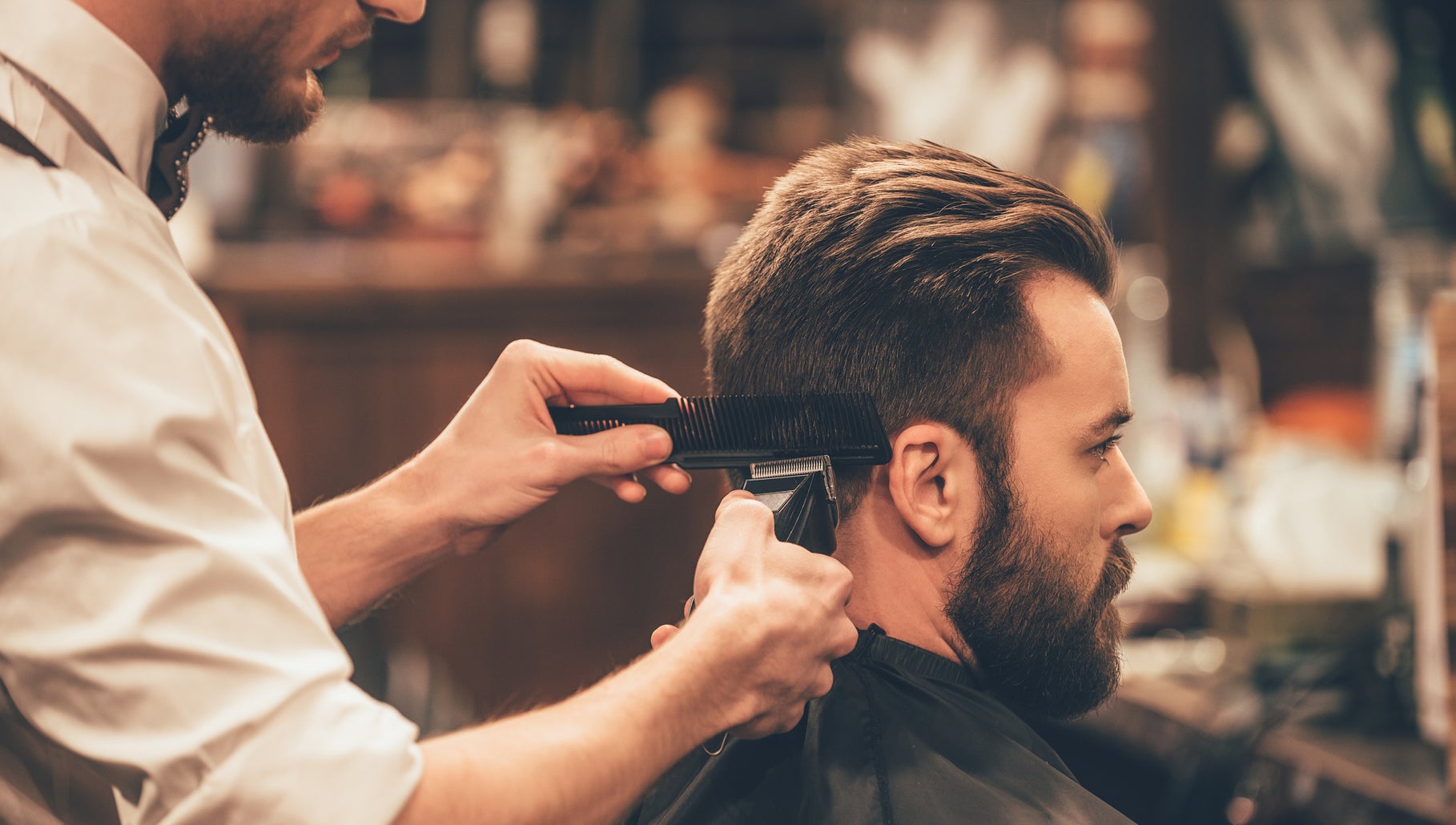
Watch a careful barber in the first minute: they comb the hair in several directions, let it fall, and comb it again. They are mapping whorls and watching which way each section settles on its own. Wet hair lies flatter and can hide a strong pattern, so a barber may check the crown dry before the cut starts.
You can help by arriving with your hair in its normal state rather than plastered into submission, and by saying where it misbehaves. Point to the spot. A sentence like "this corner stands up by noon" tells the barber more than a photo of someone else's head ever will.
Common questions
Can a cowlick be cut out or trained away?
No. The growth angle is set in the follicle and does not change with cutting or combing. Length and style choices work around it, which is why the right cut matters more than training.
Why does my crown look fine at the shop and wild a week later?
Freshly cut hair is short enough to behave. As the spiral grows, each strand gains leverage and lifts. A slightly shorter crown or a shorter return interval usually settles it.
Does hair grow in a different direction as men age?
The pattern itself stays the same, but thinning can make whorls more visible because less hair covers them. The fix is the same: adjust length rather than fight direction.
Photos in this guide are representative stock images.
← All guides from In The Cut Barbershop← Back to In The Cut Barbershop