Thinning hair punishes the wrong haircut and rewards the right one out of proportion. Hair grown long to cover a thin crown usually does the opposite of what its owner hopes: the strands separate, the scalp shows through in strips, and the whole head reads thinner than a shorter cut would. In The Cut Barbershop in Newton sees this trade-off weekly, across signature haircuts and skin fades alike.
Nothing here pretends a cut adds hair. The goal is honest arithmetic: less contrast between hair and scalp, less weight pulling strands apart, and styling that takes two minutes instead of ten. Work through the checklist below before your next cut, in order, and you will know what to ask for and what to stop doing.
Start with where the thinning actually is
Crown thinning, a receding front, and overall diffuse thinning are three different problems with three different answers. Crown loss wants short, even length so no strand is long enough to swirl and separate. Front recession wants texture and a fringe that sits naturally rather than a long sweep back that exposes the hairline. Diffuse thinning wants uniform short length everywhere, because any long section looks thin next to a shorter one.
Ask the barber to name your pattern plainly. A mirror and honest light in the shop will tell you more than a year of guessing at home. Once the pattern is named, the rest of the checklist falls into place.

The thinning-hair checklist
- Length on top: pass if short and even. Fail sign: strands long enough to lie in separated ropes. Shorter, uniform length reduces scalp contrast.
- Sides in proportion: pass if they do not puff. Fail sign: full sides under a thin top, which makes the top look thinner by comparison. A fade or close taper usually fixes the balance.
- Texture where it helps: pass if the ends are broken up. Fail sign: a blunt, shelf-like edge that draws a visible line where hair ends and scalp begins.
- No comb-over geometry: pass if hair falls where it grows. Fail sign: long hair swept across a thin area from a distant part. It separates outdoors and fools no one.
- Product matched to fine hair: pass if matte and light. Fail sign: wet-look gels or heavy pomades, which clump fine strands together and expose more scalp.
- Cut interval tightened: pass at three to four weeks. Fail sign: waiting six or eight weeks. Thin hair loses its shape faster because there is less of it to hold a line.
- Scalp visible in photos: pass if you have checked. Fail sign: judging only by the bathroom mirror. Bright light and a phone photo show what other people actually see.
Styling that holds up in Newton weather
Humidity is the local complication. Piedmont summers make fine hair go limp by midday, and heavy product melts into clumps. A matte clay or fiber, used in a pea-sized amount on dry hair, gives separation without shine. Apply it after the hair is fully dry; product on damp fine hair weighs it down before the day starts.
Blow-drying gets dismissed as fussy, but two minutes with warm air, lifting the front with your fingers, adds visible density by standing strands up instead of letting them lie flat and apart. It is the cheapest density trick there is, and it costs nothing but time.
The honest end of the scale
At some point the best answer is very short: a uniform clipper cut or a tight fade with minimal length on top. This is not giving up. Short, even hair removes the contrast game entirely, reads as a deliberate style, and ends the daily negotiation with the mirror. Many men arrive there a year later than they should have and wish they had done it sooner.
Bring it up with the barber directly if you are considering it. A good barber will tell you whether your head shape and hairline suit it, and can take you shorter in stages across two visits if the jump feels large.
Common questions
Does cutting hair shorter make it grow back thicker?
No. Cutting changes how existing hair looks and lies, not how follicles produce it. Shorter cuts read thicker because the ends are blunter and the length is even.
Should I grow the top long to cover a thin crown?
Almost never. Long strands over a thin crown separate and show more scalp than short, even length does. Keep the crown area short and uniform instead.
What should I ask for at the barber?
Name the pattern, ask for even length and texture on top, and keep the sides close enough to balance it. Then shorten your return interval to three or four weeks.
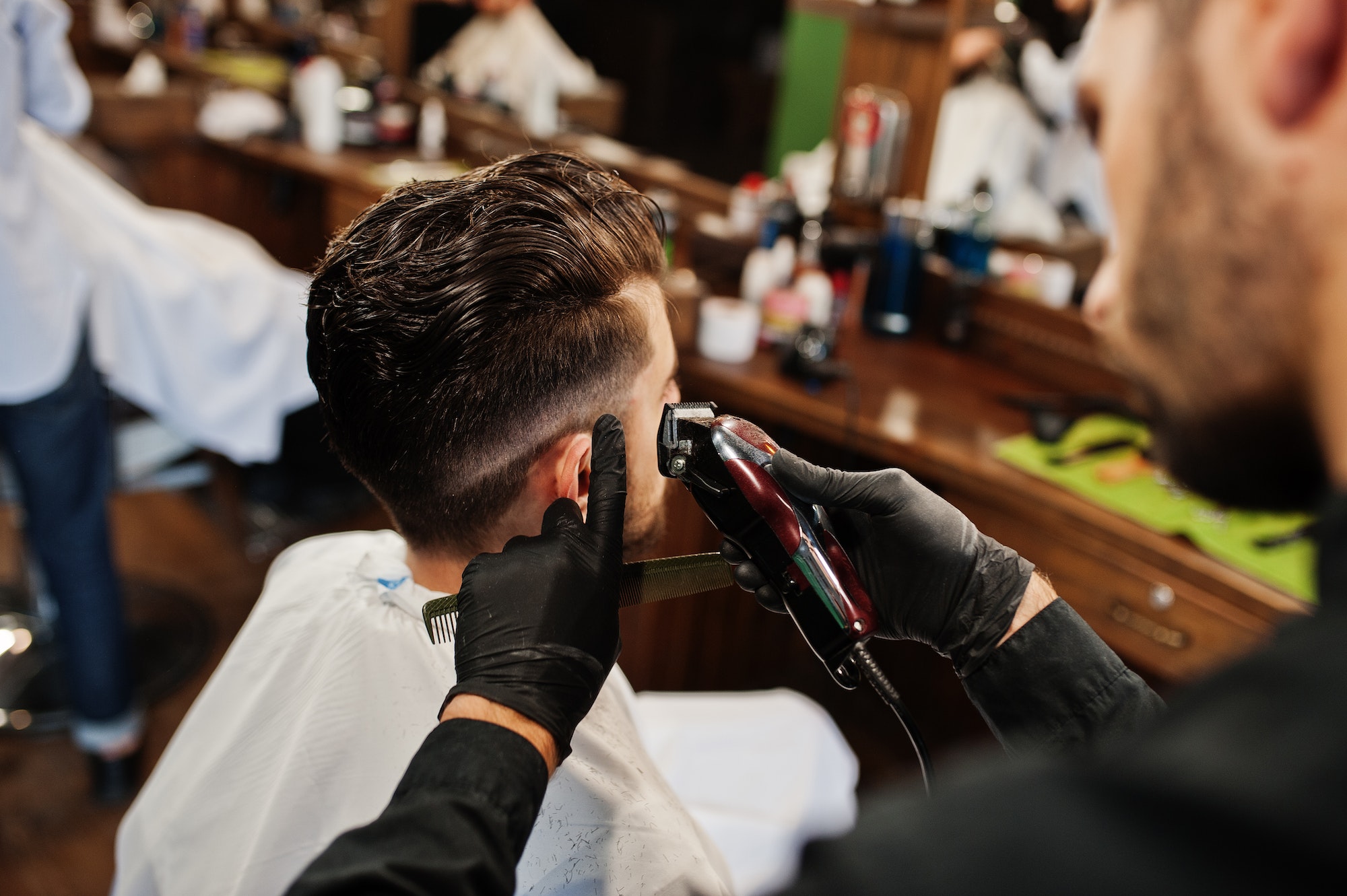
Photos in this guide are representative stock images.
← All guides from In The Cut Barbershop← Back to In The Cut Barbershop