A hot towel shave looks simple from the chair: a warm towel, a layer of lather, a razor, and you walk out smoother than any home shave manages. At In The Cut Barbershop in Newton, hot towel shaves sit on the service list alongside signature haircuts, skin fades, beard trims, and line-ups, and the service has survived every electric gadget invented since because each step does a specific job.
This is a practical walk-through of that sequence. You can borrow the preparation parts at home, and they will improve a cartridge shave noticeably. The straight razor finish is the professional line. That part takes training, a steady hand on someone else's face, and tools kept to a standard most bathrooms never reach.
What the heat is actually doing
Hair absorbs water and softens. A beard hair dry is stiff and resistant; the same hair soaked in warm water for two to three minutes swells and cuts far more easily. Barbers have measured this informally for a century: a razor that tugs on a dry beard glides on a soaked one. The hot towel is the delivery method. It holds heat and moisture against the whole face at once, opens nothing mystical, and keeps the skin warm while the hair takes on water.
Warm skin is also more pliable. Cold, tight skin bunches in front of a blade and raises the chance of nicks, especially around the chin and the corners of the mouth. A towel applied for a couple of minutes relaxes that tension and lets the razor sit flatter. The towel often comes off and a second, shorter application follows, because the first round does most of the softening and the second keeps everything warm while lather goes on.
There is a comfort effect, and it matters, but it is not the point. Clients who think the towel is just atmosphere tend to skip preparation at home, then blame the razor for a rough result. Preparation is most of the shave.
The full sequence, in order
- Clean the face. The barber starts with skin free of oil and surface dirt, so the towel's moisture reaches the hair instead of sitting on top of grime.
- First hot towel. A towel soaked in hot water, wrung out, and folded over the beard area for about two minutes. The face steams gently; the hair softens.
- Pre-shave layer. A thin oil or pre-shave product goes on under the lather on many faces, adding glide and a buffer for sensitive skin.
- Hot lather, worked in. Warm lather is brushed on in circles. The brush lifts hairs away from the skin and works moisture and soap into the base of each one.
- Second towel, briefly. Some barbers add a short second towel over the lather to keep the heat up before the first razor pass begins.
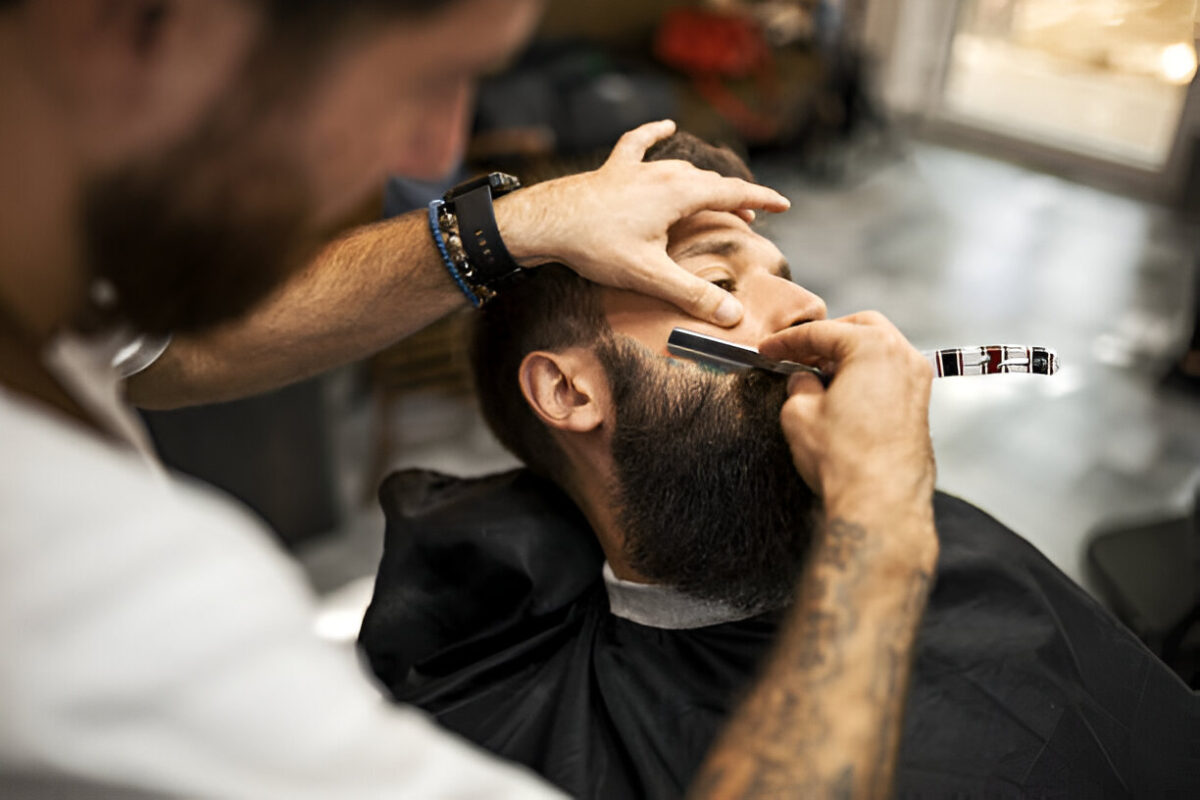
- First pass, with the grain. The razor moves in the direction hair grows, in short strokes, with the skin held taut by the free hand. This pass removes the bulk.
- Re-lather and second pass. A fresh layer of lather, then a pass across or lightly against the grain for closeness, skipping the second pass entirely on skin that reacts badly.
- Cold towel and finish. A cool towel closes the service, calming the skin, followed by aftershave or balm suited to the skin type.
What you can do at home, and where to stop
Copy steps one through four with household gear. Shave after a shower, or hold a hot, wet hand towel over your beard for two minutes before you start. Use a proper lather rather than foam from a can when you can, work it in for a full minute, and let it sit while you brush your teeth. Most men rush this to ten seconds and lose the benefit entirely.
Shave with the grain first, rinse the blade often, and do not press. If you want a closer result, re-lather before any second pass instead of going over bare skin. Finish with a cold rinse and a plain moisturizer. That routine gets a home shave most of the way to the chair version in closeness, though rarely in evenness.
Stop at the straight razor. A shavette or traditional straight in untrained hands on your own face, at mirror angles, is how small cuts and ingrown hairs happen. The barber's advantage is not the blade itself; it is hundreds of repetitions, correct skin tension, and seeing your face from angles you cannot see. In Newton summers, that also matters because humid Piedmont weather leaves skin slicker and a home razor more likely to skip and catch.
Who benefits most, and who should say so first
Coarse, curly, or fast-growing beards gain the most, because softening changes the cut the most on resistant hair. Men who shave for events, photos, or a clean reset before growing a beard out also get clear value: one even, close result with shaped edges.
Tell the barber first if your skin reacts to fragrance, if you are prone to razor bumps, or if you have a mole, scar, or active breakout in the beard area. A good barber adjusts pressure, skips a second pass, or works around a spot rather than through it. Silence in the chair helps nobody; speak up during the consultation, not after the lather is on.
Common questions
How long does a hot towel shave take?
Typically around thirty to forty-five minutes, because the towel and lather stages cannot be rushed without losing the point. Book it as its own appointment rather than squeezing it into a lunch break.
Will it help with razor bumps?
It often does, since softened hair cuts cleaner and a single-blade pass drags less than repeated cartridge strokes. If bumps are a chronic problem, tell the barber so the second pass can be skipped.
How often can I get one?
Most skin handles one comfortably every week or two, with daily home shaving scaled back in between. Very sensitive skin does better with a longer gap and a gentler home routine.
Photos in this guide are representative stock images.
← All guides from In The Cut Barbershop← Back to In The Cut Barbershop